


niime 百科
Encyclopedia of niime
播州織昔語り 西角博文さんの巻 〈前編〉
The Story of Banshu-ori: Mr Hirofumi Nishikaku
(Part 1)
2026 . 07 . 18
「健康が第一や。ストレスを溜めないのとリズムを崩さないのがすごく重要やな。健康やから毎日元気でおれるし。」
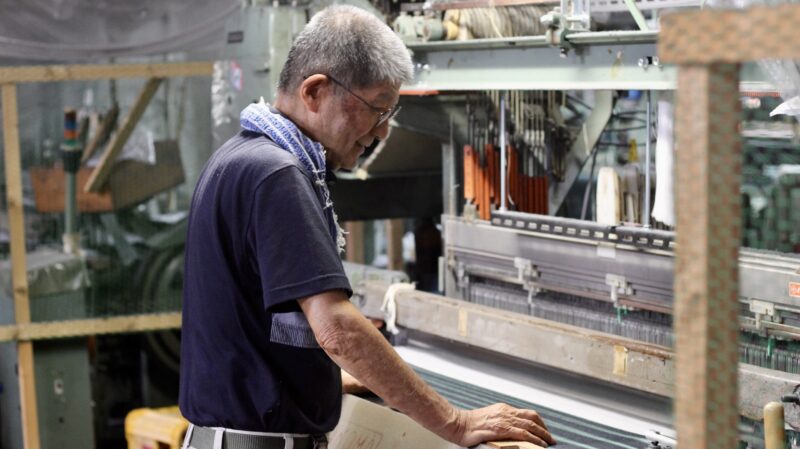
そう語るのは玉木が師匠と公言する播州織職人の西角博文さん。お隣の加東市から西脇市内にある工場に毎朝7時に来て、3時にはその日の仕事を終えるのが毎日のルーティンだ。土曜日は機を織るか、月に2回の販売イベントに出かける。そして日曜日は完全休業。
西角「生活のリズムが出来とるから崩れへんねんな。身体に悪いとこないから病院にも行かへんし。せやから、病気になるっていうのは、たぶん、そうゆうリズムが崩れよるんやろな。」
ー西角さんの場合は規則正しいというか、毎日のリズムが安定しているわけですね。
西角「疲れないのが基本や。もう78やからな。」
ーえッ!そんなになるんですか。見えないですね。70代前半かと…。全然変わられませんもんね。
西角「四捨五入したら80やな。病気せんと健康で生きておきたいというのはあるな。基本的にはいつ向こうに行ってもいいように毎日を生きてる。それ大事やろ?」
ー日々悔いなく…大事なことでしょうね。
西角「終活の段取りもしてしもてるから、嫁さんも家のモノ増やすことを嫌うし。オレのつくった生地は増えるけどな(笑)。みな売れるわけちゃうから。」
ー西角さんは西脇の南隣の滝野(加東市)の方ですよね。
西角「本家が西角綿業ゆうて、明治の代から百年以上続いとったんかな。工場があかんなってきて不動産業もしてた。65歳の時までは西角綿業に勤めとったから、サラリーマンやった。うん、月給取り。せやから今厚生年金で飯食える。会社がやってかれへんからと、60の時から給料減らされとったな。」
ー65歳までいうことは、それからもう13年ですか。
西角「西角綿業におった時から、社内で自分で別事業として自販をしよったから。」
ーあ、そうなんですか。
西角「機屋の請負仕事以外に自分でつくったものを自分で展示会とかに持って行ってた。東京まで行ったり。うん、それで玉木にも出会ったから。」
ーその自ら織ったモノを販売までしようというアイデアは…
西角「それはもう昔から。僕は西脇工業高校の紡績科を出てから京都のレースの会社に2年半行ってたんやけど、そこにミシン糸を作って全国に販売する部門があって。自販をしないと、自分で値段をつけないと、もうこれからの時代はやっていけないというのが分かったから。自販って強いなって思ったんです。それでこっちに帰ってきた時も自販の話を皆に言うたけど、その時分はまだ受注の機織り仕事で十分食えたからな。22歳で帰ってきたから、50年以上前か。うん、その頃は仕事はナンボでもあった。」
ー西角さんは何年生まれなんですか?
西角「昭和22年…1947年やけど。そやから、その時分は仕事がもう湯水にようにあって儲かってたんですよ。そこそこ仕事しとったら食えた。」
ー1947年生まれで、 22歳で帰ってきたということは、 1969年(昭和44年)ですね。その頃はもう昭和30年代のいわゆる「ガチャンと織れば万の金が儲かる」と言われた『ガチャマン景気』の時代ではなくて。
西角「ないけど、まあまあ、うん。その時代から10年か15年間くらいが全盛期やったからな。いつ頃になるかは分らへんけど、いずれ播州織産地がアカンようになる、落ちるのは分かっとったから。我々がイギリスの織物産業を潰してきたわけやから、自分らが奪い取ってきたから、今度は潰される番やからな。それはずっと思ってた。それで、やっぱり自分で販売していかなアカンてゆうてたよ。当時は仕事があったから別によかったわけやけど。」
ーはい。
西角「自分が自販をするって決めた時に産元さんに、飯いっぱい食えないから自販しに行くねんでって言った。そのことをはっきり宣言したからな。産元の人もいや、行ってくれていいって。15、 6年…もうちょっと前か。その時分からもう、仕事がなかったからな。飯さえ食わせてくれたらそんな必要ないわけやけど、行ったからってすぐ儲けに繋がるわけやないからシンドイもん。そうやって出て行ったから今があるねんけどな。急に始めたわけやないから、今は積み重ねの延長線上にあって、工場はアカンようになったけど、お客さんと繋がったからね。そうやって始めて。」
ー西角さんが自販を始められた頃は、他にはそういう方はいらっしゃらなかったんですか?
西角「何人かいてたと思いますよ。工場によってみんな体質というかやり方が違うから。自分は自分に合うやり方をしないと。」
ー16年ぐらい前ですか。それで自販を始めて、当時はどういうところを回られたんですか?
西角「展示会やな。東京に年2回くらい出しよったから。」
ー展示会もそんな頻繁には無いんとちゃうんですか?
西角「年に2回あったら十分。2回あって試織して新しい商品を持っていかなあかんから、半年にいっぺんがちょうどいい。展示会用に新しい商品を持って行かないと。他の出展者は古い商品も持ってくるから。よう見てる人は、これ前回も出てましたね、とか言う人がいてるんやな。その人はちゃんと見てくれてるわけや(笑)。」
ーよく商品を見てくださって指摘をしてもらえたということですね。
西角「その人には感謝やな。ちゃんと見とってくれたゆうことや。」
ーそれは生地が集まる見本市みたいな場ですか?
西角「生地、全国の自販をしよる織屋さんや繊維関係の人、色んな産地の業者が集まって、みんなそれぞれ違うから、よそのやり方を勉強できるわけ。商売のことも。その人らはもっと昔から自販をやってるから、情報いっぱい持ってるからいろいろと教えてくれるわね。それはありがたかったね。」
ー具体的な産地で言うと…
西角「遠州とか長浜とか、桐生とか、日本の産地。今治のタオル屋さんとか、他の業種の人も。だからいろんな繊維の業種、アパレルに売るための。すごく勉強になるわな。
そこで売れんでもええ、そこで話をすることが、ものすごい情報として重要やったな。」
ーなるほど…。情報交換といいますか。
西角「こっちにおったら分からんことばっかしやから。だから変な言い方したら、情報収集しに行きよるみたいなもんやね(笑)。」
ーホンマですね。この産地に閉じこもっていたらできなかったことですね。
西角「そうそう。西脇におってもアパレルさんの情報が入ってけェへんから。」
ー直には。
西角「で、アパレルさんの欲しいモノがいろいろと分かってくるし。その場で売れんでもいいのよ。アパレルさんと気さくに話ししとったら、何が欲しいとかって分かってくるやんか。その人が買ってくれなかったとしても、他へ持って行ける。」
ーなるほど、なるほど。
西角「今もワシは神戸の新開地のイベントへ行ってるやん。ひとつは情報やねんな。何が売れるとか、何が欲しいとか、ここにいてはわかりませんやんか。お客さんと話をすることによってお客さんが欲しいもんが分かるから。それに向かって作れるから。自分が作りたいモノと、お客さん欲しいモノは違うから。昔は自己満足で作ってたけど、今はもうお客さんが欲しいモノを作らないと買ってもらわれへんからな。技術的に難しいようなモノじゃなくて簡単なモノでよくて、ちょっと見え方の違うモノが必要やな。」
ー深いですね。
西角「手の込んだもんいらんねん。」
ーシンプルなモノで良いと。凝ったモノでなく。
西角「自分らはそっちやんか。他とちょっと違うもん作りたいって思うねんけど、そんなんじゃなくてもええねん。よそに無いような表情のモノが欲しい、シンプルでも表情は変えられる。シンプルでも糸を変えてさえ、違う表情になるから。そういうのが分かってきたんや。分かってきたというか、自分は色々と織機に装置付けてこだわって織った方がええと思ってたけど、そんな風にこだわっても売れへんもんは売れへんし。」
ー職人として凝って作りたいモノとお客さんの求めるモノとの違い…
西角「うん。それはお客さんの前に出な分かれへんことやわ。今は自分にもファンがついてるから、それぞれに買っていくから。その人が好みそうなモノを、買ってくれるかどうかわからへんけど提案していく。」
ー外に出てっていうのはほんとに…
西角「大事やなぁ。いや、行ってもお金儲けとかは出来へんで、そんなガバッとは。せやから情報買いに行っきょると思たらええ。とりあえず世の中を知るっていうのが大事やな。一般の人の考え方な。お金持っとる人も持ってない人もね。その中で自分にできることがハマったらええねんから。だからお客さんに自分にはできんことはできんってハッキリ言うし、よそで買ってくださいとか言うもん。自分がその人に100%提供できるわけやないから。自分の個性を出さないと、埋もれてしまう。個性のある商品でお客さんに買うてもらう。難しいけどな。」
ー求められるのは凝ったモノというよりも、シンプルでも個性があるモノだと。
西角「あの人が作った生地やって分かる、玉木も玉木の生地やと分かるように、俺が作った生地で西角さんのええなって言うてくれてこう…それはお金になるかどうかは別問題やな。だからファンを増やす。究極言うたら『信者』みたいなもんや。一種そういう感覚やと思うねん。玉木もそうやと思う。変な言い方やけど。西角さんのファンやでって言われる、昔はそんなこと考えたこともなかったら、お客さんがそんな風に言い始めたから、あ、そうかと。」
ーそれはやっぱり積み重ねがあるからこそでしょうね。
西角「(そんな風に言われるようになったのは)ここに来てやっとやから。俺も発信してなかったし、そんなに。」
ー発信の仕方としては…
西角「インスタ上げてるやんか。」
ーインスタを。すごい!
西角「イベントに行く時とか、自分がどこにおるのか、インスタに上げてくれってお客さんに言われたんや。新開地に明日行くんやったらインスタで分かれば合わせていけるからって。誰かにやってもらってるんですかって言われたら、いやこれは俺がしょるねんって。分からんもち、とりあえずしょるねんって(笑)。」
ー素晴らしい。
西角「なんとなく出来とるからまあええねん。文章間違ごうとるって息子に言われたけど。」
ーでもいついつここにおるというのが分かれば…
西角「そうそう、それだけでお客さんは来てくれる。うん、だから、インスタ見て、あ、来とってやからそこ行こうとかね、僕は加古川のイベントへも行ってるんやけど…」
ーそうなんですね。
西角「うん、加古川の志方にね、第二、第三土曜日と。そこに喫茶店があって、「露草」ってギャラリーがあんねんけど、そのギャラリー貸してもらって、商品持って行って売ってんねんけど、加古川やったら近いやろ?一本道で来れるから。せやから、西脇までは来られへんけど、ここやったら来れるからって来てくれる、うん。なんでか知らんけど向こうの店長に繋がって、来てもらってもいいよって言われたから。」
ーまあ、ほんまアレですね、“ 一日にしてならず。”というか。
西角「そうそう、だから、これまでやって来て、なんかワシの人間性を見てOKくれたったんかなって思う。」
ーやっぱり、モノづくりいうたら、その人の個性や人柄が反映される…
西角「うん、だから多分、自分も欲はたいしてないから、お金お金って言うてないから。向こうが気ィ遣うてや。ワシはな、そこ行ったからゆうて売り上げ無かっても、坊主になっても別にそんなんなんとも思てへんからって言うとんねんで。俺にはそんなに力はないから。で、インスタ上げかけてからやっぱりお客さんが自分を目的に来てくれてやから。」
ーやっぱり違いますか。
西角「違うねん。やっぱり発信はしないと。」
ー大事ですね。
西角「加古川や高砂の近辺やったら、構えんでも来れるから。西脇までやったら構えて来んなんから。」
ー街の方からやと片道一時間ぐらいですかね。
西角「一時間超えたら構えると言うてや。」
ーお客さん的にはどうですか?
西角「玉木のお客さんも結構来てくれてやし、結構買ってくれてや。」
ーそうなんですね。
西角「自分より若いで(笑)。」
ーそれはそうでしょう(笑)。
西角さんの播州弁による、自然体で飄々とした語り口に魅了される。
播州織職人としての豊富な経験と技術力と矜持、そして先の時代を的確に読む目と、旺盛な好奇心で謙虚に他産地からも学ぼうとする姿勢…。
群れから離れることを厭わず、しかしおのれに無理を強いず、自分の信念に従って歩んできた西角さんの言葉の数々はシンプルでありながら含蓄がこもっていた。
次回、玉木との運命的な出会いや、播州織の昔々を語る西角さん。貴重な産地の歴史を口伝で伝える後編もどうぞお愉しみに。
書き人越川誠司
“Health comes first. It’s really important not to let stress build up and not to disrupt your daily routine. When you’re healthy, you can feel good and stay energetic every day.”
These are the words of Mr Hirofumi Nishikaku, a Banshu-ori textile craftsman whom Ms Tamaki openly describes as her mentor. Every morning at 7 a.m., Mr Nishikaku travels from neighboring Kato City to his factory in Nishiwaki City. He finishes his work for the day at 3 p.m. This is his daily routine. On Saturdays, he either weaves fabric or attends one of the two sales events he participates in each month. Sundays are strictly days off.
Nishikaku: I’ve established a daily rhythm, so I don’t let it get disrupted. There’s nothing wrong with my body, so I don’t even go to the hospital. I think people probably get sick when their daily rhythm starts to fall apart.
― So, in your case, it’s not just about being disciplined. Your daily routine is really consistent.
Nishikaku: The basic thing is not to wear yourself out. I’m 78 now, you know.
― “What?! You’re that old? You don’t look it at all. I would have guessed you were in your early seventies. You haven’t changed a bit!
Nishikaku: If you round up, I’m 80! I do want to live a healthy life without getting sick. Basically, I live every day prepared to leave this world whenever my time comes. That’s important, isn’t it?
― Living each day without regrets… Yes, that’s important.
Nishikaku: I’ve already made all the arrangements for the end of my life, too. My wife doesn’t like bringing more things into the house. Although the amount of fabric I make keeps increasing! (laughs) Not everything sells, you know.
― You’re from Takino, in Kato City, just south of Nishiwaki, right?
Nishikaku: My family’s main business was called Nishikaku Cotton Industry. It had been around for over a hundred years, since the Meiji era. When the factory started going downhill, the company also got into real estate. I worked for Nishikaku Cotton Industry until I was 65, so I was a salaried employee. Yes, I earned a monthly salary. That’s why I can live on my employees’ pension now. The company started cutting my salary when I turned 60 because it was struggling to stay in business.
― So you’ve been doing this for 13 years since you turned 65.
Nishikaku: Actually, even when I was working at Nishikaku Cotton Industry, I was running my own separate business within the company, selling my own products directly.
― Oh, really?
Nishikaku: Besides the contract weaving work we did for textile wholesalers, I took the fabrics I made myself to trade shows and sold them directly. I even went to Tokyo. That’s how I met Ms Tamaki, too.
― Where did you get the idea of selling the fabrics you wove yourself?
Nishikaku: I’d had that idea for a long time. After graduating from the textile department at Nishiwaki Technical High School, I worked for a lace company in Kyoto for two and a half years. They had a department that manufactured sewing thread and sold it nationwide. That experience made me realize that businesses wouldn’t survive in the future unless they sold their own products and set their own prices. I realized how powerful direct sales could be. When I came back here, I told everyone about selling directly, but at the time, there was still enough contract weaving work to make a decent living. I returned when I was 22, so that was more than 50 years ago. Back then, there was more work than you could imagine.
― What year were you born?
Nishikaku: 1947. That was Showa 22. At that time, there was work everywhere, like water flowing from a tap, and people were making good money. As long as you did a reasonable amount of work, you could make a living.
― So, you returned in 1969, when you were 22. By then, it was no longer the famous ‘Gachaman boom’ of the 1950s, when people said you could make a fortune just by turning on a loom and weaving fabric. Nishikaku: No, that period had passed, but things were still pretty good. The industry’s golden age lasted about 10 to 15 years from that time. I didn’t know exactly when it would happen, but I knew the Banshu-ori textile industry would eventually decline. After all, we had helped destroy Britain’s textile industry by taking its business away. So I knew that someday, we’d be the ones to lose out. I’d been thinking about that for a long time. That’s why I kept saying we needed to sell our own products. Of course, back then, there was still plenty of work, so it wasn’t an immediate problem.
― I see.
Nishikaku: When I decided to start selling my own products, I told the textile wholesaler who handled our production, ‘I can’t make enough to live on anymore, so I’m going to sell directly.’ I made my intentions perfectly clear. They told me, ‘Sure, go ahead.’ That was about 15 or 16 years ago, perhaps a little longer. By then, there wasn’t much work left. If the contract work had paid enough to feed me, I wouldn’t have needed to do it. And even if you go out and try to sell your own products, you don’t start making money right away. It’s hard work. But because I took that step, I’m where I am today. I didn’t suddenly start from scratch. Everything I do now is an extension of what I’ve built up over the years. The factory business declined, but I built relationships with customers. That’s how it all began.
― When you started selling directly, were there other people doing the same thing?
Nishikaku: I think there were a few. Every factory has its own character and its own way of doing things. You have to find the approach that suits you.
― So, about 16 years ago, you started selling directly. Where did you go to sell your products?
Nishikaku: Trade shows. I used to exhibit in Tokyo about twice a year.
― Weren’t trade shows held more frequently than that?
Nishikaku: Twice a year was enough. Each time, I had to make trial fabrics and bring new products. Once every six months was just right. You need new products for every show. Other exhibitors bring their old products, too. Some people really pay attention. They’ll say, ‘Oh, you had this at the last show, too, didn’t you?’ That means they’ve been looking carefully! (laughs)
― So those people were paying close attention to your products and pointing things out.
Nishikaku: I’m grateful to them. It means they were really looking at what I was making.
― Was it like a trade fair where people gathered to display and sell fabrics?
Nishikaku: Yes. Textile manufacturers from all over Japan who sold their own products, people in the textile business, and businesses from different textile-producing regions all gathered there. Everyone did things differently, so I could learn from the way other people ran their businesses. I learned a lot about sales, too. Those people had been selling directly for much longer than I had, so they had a wealth of information and taught me all kinds of things. I was really grateful for that.
― Which textile-producing regions are we talking about? Nishikaku: Enshu, Nagahama, Kiryu, and other textile-producing regions around Japan. There were also towel manufacturers from Imabari and people from other industries. People from all sorts of textile-related businesses came together to sell to apparel companies. It was an incredible learning experience. It didn’t even matter if I didn’t sell anything there. The conversations themselves gave me extremely valuable information.
― I see. So it was a way to exchange information.
Nishikaku: There’s so much you can’t learn when you stay here. You could say I was going there mainly to gather information! (laughs)
― Exactly. You couldn’t have learned those things if you had stayed within the local textile industry.
Nishikaku: That’s right. If you stay in Nishiwaki, you don’t get much information directly from apparel companies.
― Not firsthand, anyway.
Nishikaku: Exactly. By going out there, I gradually learned what apparel companies wanted. It didn’t matter if I didn’t sell anything on the spot. If you talk openly and casually with people in the apparel business, you start to understand what they’re looking for. Even if one person doesn’t buy your fabric, you can take it somewhere else and find a customer. Making what customers want, not just what you want to make.
― I see.
Nishikaku: Even now, I go to events in Shinkaichi, Kobe. One of the reasons is to gather information. You can’t know what sells or what people want if you just stay in one place. By talking with customers, you find out what they’re looking for. Then you can make products that meet those needs. What I want to make and what customers want to buy are not necessarily the same thing. In the past, I made things mainly for my own satisfaction. But now, if I don’t make things that customers want, they won’t buy them. The products don’t have to be technically complicated. Simple things are fine. They just need to have a slightly different look or feel.
― That’s a profound insight.
Nishikaku: You don’t need anything overly elaborate.
― So simple is good. It doesn’t have to be complicated.
Nishikaku: We craftspeople tend to want to make something different from everyone else’s products. We think we need to make something elaborate or unusual. But that’s not necessarily what customers want. They want something with a distinctive character that they can’t find elsewhere. Even a simple fabric can have a different character. Just changing the yarn can completely change its appearance. I’ve come to understand that. Or perhaps I should say, I used to think it was better to add various attachments to my loom and put a lot of effort into the weaving process. But even if you go to all that trouble, a product that won’t sell simply won’t sell.
― So there’s a difference between what you want to create as a craftsperson and what your customers are looking for.
Nishikaku: Yes. You can’t understand that unless you go out and meet your customers. Nowadays, I have people who are fans of my work. They each have their own preferences and buy the fabrics they like. I suggest things that I think a particular customer might like, even though I can’t be sure they’ll buy them.
― Getting out there and meeting people really is…
Nishikaku: Important. You won’t suddenly make a fortune just by going to events. You’re not going to make huge amounts of money overnight. So it’s better to think of it as paying for information. The important thing is to learn about the world around you. You need to understand how ordinary people think, whether they have money or not. Then, if what you can offer happens to match what someone needs, that’s great. That’s why I’m honest with customers. If there’s something I can’t do, I tell them clearly. Sometimes I even say, ‘You should buy that somewhere else.’ I can’t provide absolutely everything a customer wants. If I don’t express my own individuality, my products will get lost among everyone else’s. I need to make products with their own character so that customers will choose to buy them. It’s not easy, though.
― So what customers want isn’t necessarily something elaborate. It’s something with its own character, even if it’s simple.
Nishikaku: Exactly. You can tell when a fabric was made by a particular person. You can recognize Tamaki’s fabrics as Tamaki’s work, too. I want people to look at something I’ve made and say, ‘Oh, this is a Nishikaku! I really like his fabrics.’ Whether that translates into money is a separate matter. The important thing is to build a following. If I had to put it in the strongest possible terms, it’s almost like having devoted believers. That’s how I see it, in a way. I think Tamaki is similar, too. It may sound strange to put it that way, but that’s how it feels. People started telling me, ‘I’m a fan of Nishikaku’s work.’ I’d never even thought about that kind of thing before. When customers started saying it, I thought, ‘Oh, I see!’
― That must be the result of everything you’ve built up over the years.
Nishikaku: It’s only recently that people have started saying that to me. I hadn’t really been putting myself out there or sharing my work very much.
― How do you promote your work? Nishikaku: I post on Instagram.
― Instagram! That’s great!
Nishikaku: When I go to events, customers tell me to post on Instagram so they can see where I’ll be. They say, ‘If you’re going to Shinkaichi tomorrow and I can find out on Instagram, I can plan to come and see you.’ People ask me, ‘Does someone else manage your Instagram for you?’ I tell them, ‘No, I do it myself! I don’t really know how to do everything, but I just give it a try! (laughs)
― That’s wonderful!
Nishikaku: I can manage somehow, so that’s good enough. My son tells me I make mistakes in my writing, though.
― But as long as people know when and where they can find you…
Nishikaku: Exactly. That’s all it takes for customers to come. They see my Instagram and think, ‘Oh, he’s there! I’ll go and see him.’ I also go to events in Kakogawa.
― Oh, really?
Nishikaku: Yes. I go to Shikata in Kakogawa on the second and third Saturdays of the month. There’s a café there with a gallery called Tsuyukusa. They let me use the gallery space, so I take my products there and sell them. Kakogawa is close by, isn’t it? You can get there along one straight road. People tell me, ‘I can’t quite make the trip all the way to Nishiwaki, but I can come here,’ and then they come to see me. I’m not exactly sure how the connection came about, but I got to know the manager of the place, and they said I could come and sell my work there.
― It really is a case of ‘Rome wasn’t built in a day,’ isn’t it?
Nishikaku: That’s right. I’ve been doing this for years, and I think perhaps they agreed to let me use the space because they’d come to understand what kind of person I am.
― When it comes to making things, a person’s individuality and character are reflected in their work…
Nishikaku: Yes. I’m not particularly greedy, either. I’m not constantly thinking about money. The people who let me use their space sometimes worry about me. I tell them, ‘Even if I come here and make no sales at all—even if I sell absolutely nothing—it doesn’t bother me.’ I know my abilities are limited. But ever since I started posting on Instagram, people have begun coming specifically to see me.
― So it really has made a difference?
Nishikaku: It has. You really do have to put yourself out there.
― That’s important.
Nishikaku: People who live around Kakogawa or Takasago can come without making a big plan out of it. But if they’re coming all the way to Nishiwaki, they have to make a special trip.
― From the city, it must take about an hour each way.
Nishikaku: Once it takes more than an hour, people start to feel they have to make a real commitment to the trip.
― And how have the customers been responding?
Nishikaku: Quite a few of Tamaki’s customers come to see me, too. And they buy quite a bit.
― Really?
Nishikaku: They’re younger than I am, too! (laughs)
― Well, of course they are! (laughs)
A craftsman who follows his own path. I was captivated by Mr Nishikaku’s natural, unassuming way of speaking in the Banshu dialect, delivered with an effortless, almost nonchalant charm.
His words reveal not only his extensive experience, technical expertise, and pride as a Banshuori craftsman, but also his ability to anticipate the direction of the times and his genuine curiosity and humility in learning from other textile-producing regions.
Mr Nishikaku has never been afraid to step away from the crowd. At the same time, he has never forced himself to do things that go against his nature. Instead, he has followed his own convictions throughout his life. His words are simple, yet filled with profound wisdom.
In the next installment, Mr Nishikaku will tell us about his fateful encounter with Tamaki and share stories from the early days of Banshu-ori. Don’t miss the second part, which preserves the precious history of this textile-producing region through the oral recollections of one of its craftsmen.
Original Japanese text by Seiji Koshikawa.
English translation by Adam & Michiko Whipple.