


niime 百科
Encyclopedia of niime
玉木新雌、『新雌邸』を語る。
Niime Tamaki talks about "Niime Residence"
2025 . 07 . 09
「新雌邸」がついにそのヴェールを脱ぎ、開館の時を迎える。
昭和の時代、播州織の好況を背景に「文化工芸都市」を名乗った西脇において、文化連盟の初代会長や岡之山美術館の初代館長も務め、西脇のまちの文化を代表する顔的存在だった故岡澤薫郎氏の旧邸が新たなtamaki niimeの拠点「新雌邸」として再生し、公開・開放される。
日本古来の暦と自然の変化に則った暮らしにならい、月に二度、新月と満月の日にお屋敷は開かれる予定と聞く。
tamaki niimeならではの「niime村構想」をより具現化する、これからの時代の暮らし方、その「実験」の場でもあるという「新雌邸」。代表・玉木に見えてきたヴィジョンと「新たな場」への想いをあれこれと語ってもらった。
玉木「最初に足を踏み入れた時に、あのお屋敷の中で老若男女がすごく楽しそうに、みんながそれぞれのことをしてるんだけどすごく豊かな時間を共有しながら過ごしてるっていう映像が見えたの。それが過去のものなのか、未来の絵なのか、私がこうなったら良いな…という理想の像なのか、岡澤薫郎先生が見せて下さったものなのかわからないけど、あッ!!って。」
——理想の像が…。
玉木「手入れのお金もかかるし、本来行政だとか公がメンテナンスして活用するような建築物なんだろうけど、そのヴィジョンで観たすごく豊かな時間の中に私もいたい…。そう思ったから、やってみようと。あの場所が私を呼んでる、みたいな。何年も前に購入して、「市街化調整区域」であるという縛りもあったんですが、紆余曲折を経て、開館できることになりました!!」
——ここまでの道のりは大変だったことでしょうがついに開館!おめでとうございます。
玉木「広すぎてね。掃除、掃除、掃除に次ぐ掃除。」
——いったい何部屋くらいあるんでしょうか?
玉木「20部屋くらいはあるかな。母屋のふすまを開けるとドーンと大広間になる。最初に『大地の再生』さんに入ってもらって、場を清めるというか、空気を通してもらって。はじめのうちは初子さんが定期的に掃除してくれて、きれいな状態を保ってたんですけど、亡くなったことでみてくれる人がいなくなって管理が行き届かなくなって、庭とか荒れてきて…それからの改装だから、けっこう頑張りました!」
——どのように改装を?
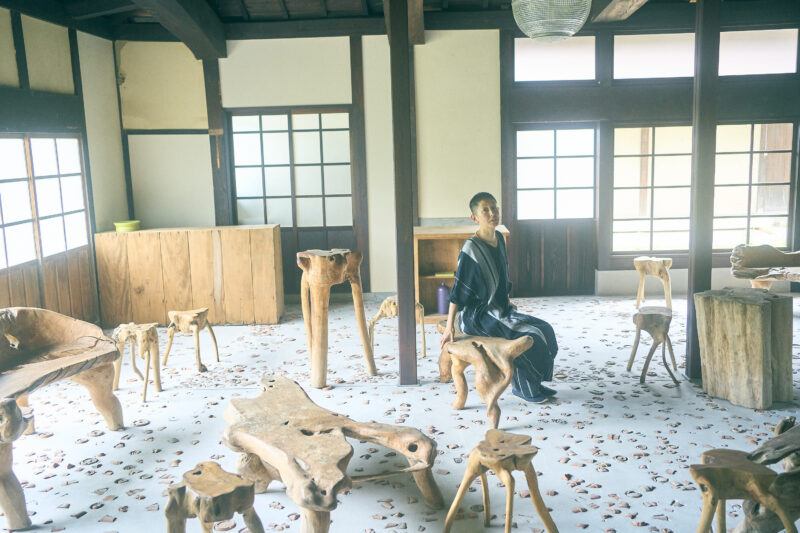
玉木「基本的には元々のお屋敷にその後付け加えられたものをすべて取り払う。プラスティック製のものであるとか。時代を巻き戻す的な感じで…このお屋敷に人が集っていた時代を新たに体験してみるような場になればと改装しました。」
——岡澤先生を囲んでの様々な方たちの集い処でもかつてはあったのでしょうね。
岡澤薫郎さんは西脇市嶋地区にあるこの屋敷に生まれ育ち、西脇工業高校の教師、兵庫県議会議員、西脇文化連盟会長、 岡之山美術館館長などを歴任。退職後には俳画を趣味として多数の作品を遺され絵日記や旅先でのスケッチも数多い、昭和の時代の、西脇きっての文化人だった。
玉木「私たちは岡澤先生とは接点がないからこそ、その生き方だったり、想いだったりをご存知の皆さんから聴いて語り継いでゆくという場にもなれば。西脇を豊かにしてゆくための活動を担っていきたいな、というのが今回の想いです。」
——伝統の播州織、横尾さんに象徴される創造的なアート、多様で豊かな地域文化を誇っていた西脇の歴史を引き継いで行ける場になるように思えます。
玉木「西脇ってスゴイ、観るべきところが多いじゃないですか?でもそこが…けっこうわかりにくくないですか?」
——そうですよね…。
玉木「私は西脇と播州織の黄金期を話に聞いて、知識として頭に入れたわけだけど、「口伝」じゃないと知り得ない情報がけっこう多くて。」
——播州織の活況を背景に文化的にも豊かだったまちの記憶の継承が、まだまだ不足している気がしますね。
玉木「すっごいもったいな~……って思って。新雌邸を博物館にしようとは思わないものの、やっぱりちゃんと「口伝」が伝わってゆくような場所というか…そのきっかけづくりみたいなものはちゃんとしていかないと、すごく豊かな時代に育まれた文化が、消えてしまいそうだなと思って。」
——そういう意味で言うと、私は西脇というまちの昭和の最盛期を知る世代ですけど、今の若い人たちにしたら実感がない…
玉木「ないねん。」
——その落差を埋め合わせてゆく作業をして行かないと、本当の継承にならないかと思うんです。
玉木「だから、当時をよくご存知の方たちに語っていただき、伝えつつ、写真であれアートであれ作品の発表やお話で何かが産まれてゆく場として、ここを使えていければ良いんじゃないかと。」
——素晴らしいお屋敷だけに、展示したり発表したりのクオリティも担保されるべき空間になるかと思うんですが、創り手や語り手のモチベーションにも繋がれば良いですね。
玉木「大切に使って行けたら良いね。本当に良いと思うモノをしっかりと伝えましょう。」
——はい。
玉木「こないだスタッフと話していてわかりやすかったんは、クオリティを担保しながらの公民館、『niime村の公民館』というイメージ。例えば現代アーティストのAYUMI ADACIさんの作品発表の場だったり、今度試しに使ってみるんですけど、『いどばたまき』をやってみるとかいう風に、色んな人たちがさらに学びを深めたり、新しい文化や歴史を知るとか、そしてtamaki niimeの『純粋な国産』を飾っておくショールームとしても使っていきたいなと。」
——なるほど…。
玉木「ただ毎日のように開催ではなく、昔の暦に合わせて、新月・満月の日のオープンにします。それと出展者さんが店長として居てくれるのであれば、不定期で開けるのも全然ありだなと。だから「場」としてtamaki niimeが提供し、そこを皆んなで育ててゆくカタチにしていきたいので、これからの成長は…“未知数”!」
——あぁ~…。
玉木「ただ『新雌邸』としてるだけに、将来的には私が住もうと。今は動物ちゃんたちと暮らしてるしまだ住めないけど。」
——「終の住処」的な…。
玉木「こっちのLabが現代的なモノづくりの場とするならば、『新雌邸』は昔ながらのモノづくりの場にしていけたらと。電気を使わない機械はあっちに集めてコチョコチョと色んなモノづくりをしていきたいなと。ある種災害時とか、“もしも”の時にやれることを増やすための、“避難所”的な意味合いも含めつつ。」
——そういう意味での「実験の場」でしょうか。昔ながらの暮らしをどう今の時代に受け継ぎ発展させゆくか?の…
玉木「それが本当に豊かになり得るかどうかの。」
——手織りの木製の織機とか、建物にしっくりと馴染みそうですね。
玉木「おいおいそれらを展示しながら使ってみれるような場所にしていけたら。季節に応じて、例えば梅の実を採って漬けるとか、四季の暮らしをしながらモノづくりもしてゆく。昔のおじいちゃんおばあちゃんの家で子どもたちも遊びに来るような。そんな風になっていくと良いな~と思って。」
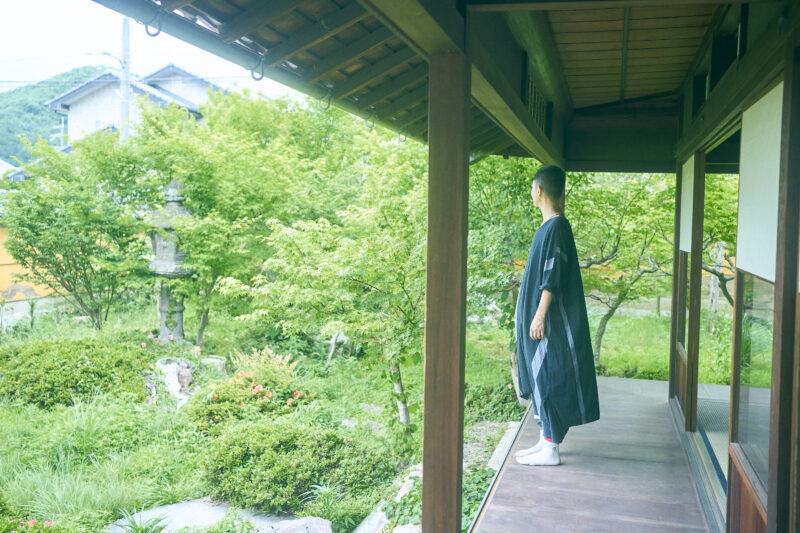
——縁側でなにかやってると子どもたちがやってくるみたいな。
玉木「私がおばあちゃん役というのでなくても近所の人でも良いし。核家族化・少子化でコミュニティが小さくなっちゃってる時代だからこそ、なるべく色んな人たちとともに時間を過ごし、学校で学ぶということじゃなく、暮らしながら知恵を伝えていくみたいなことがあそこで出来たらいいな、と。それこそ井戸もあるからその周りで『いどばたまき』も出来るしさ。『コシラエ会』や『腹ごしらえ会』も。」
——「コシラエ会」って昔ながらに手を動かして何かこしらえるので、新雌邸の空間であれば、よりその狙いが明確になる気がします。お店の展開とかについてはどうですか?
玉木「飲食ができるからね。ドリンクのサービスがある。」
——ショップとしては?
玉木「tamaki niimeとして『純粋な国産』を取り扱います。これまでは鎌倉店のみの販売だったんですが、このオープンを期に、新雌邸でショールーム的に飾らせていただくのと、オンラインでの販売も同時に進めています。」
——新月・満月の日にオープンというのは、古来からの暦に則って、身体のリズムも含めて、本来の暮らし方を呼び起こそうということなんでしょうか?
玉木「そう。私は1日と15日に神棚に向かって祝詞を上げていたんですけど、今年から、新月と満月にしたんですよ。やっぱり自然と暮らすほどに地球ってお月さまとお日さまからエネルギーをいただいていると感じるから。世の中のカレンダーよりは地球の流れに即した方が豊かだなと感じたので、旧暦で動いてみようと試みているんですけど…本来五感で感じ取れた筈の暦の感覚がわからなくなっているのが残念だから、土曜・日曜
は関係ない、大事なのは新月と満月です!!と。」
——五感で暦の変化のリズムを感じ取ると。
玉木「新しい試みだからこそ、お月さんとともに生きるという意味合いを体感してみたい、という想いから、月2回のオープン日の着地を新月・満月にしました。」
——これもまた新たな実験ですね。
玉木「『純粋な国産』の販売に関しては鎌倉で手掛けてきた阿江が得意とするところなので、新月・満月には彼女に西脇に帰って来てもらい店長をしてもらうと。」
——旧暦のリズムということでいえば、種を蒔くタイミングや栽培にも、『自然農法』であるとか、昔ながらの農のやり方がありますね。
玉木「していきたいなっていう段階です。」
——「腹ごしらえ会」だったり、食については。
玉木「母屋と離れがあるんですけど、今回のお披露目は母屋のみです。8畳間が6つで48畳。真ん中に2畳あるから全部で50畳が繋がるように…表庭から中庭まで、風がスコーンッ!と通る。」
——すごいですね…。
玉木「無茶苦茶気持ちいい。こないだ掃除の時にエアコンなかったけど全然涼しかったです。建物の周囲はぐるっと塀があるから、新雌邸が休眠してた間はシンちゃんとジジちゃんとリモちゃんを連れて行って玄関を閉め切って自由に遊び回れるというすごい豊かな時間を過ごした…。建物と庭と畑。井戸もあるし、もしも何かが起こっても、ここで生きていけるという感じがすごくある。果樹がいっぱい植ってるし、ハウスもある。2階の部屋にADACHIさんが作品飾ってくれてて。そこを出たら屋根裏になる。大きな梁があって雰囲気があって…」
——…実際に皆さんご覧になるまでに妄想を膨らませていただきましょう。最後に「新雌邸」のあり方について語ってください。
玉木「世界中に向けて発信する場。世界に向けてこれからの豊かな暮らしってこうゆうのじゃない?、ってゆう提案の場所にしたい。日本の昔ながらの暮らし方が、とても豊かなものだったのではないか?…という私なりの”仮説“をもとに、この場で実証してみたい。世界中の人たちがその目で見て体験したくなるような場所にするために、地域の人たちと協力してやってゆくのが良いなと。」
——日本の伝統的な暮らしに則った、これからの暮らし提案を丸ごと発信する場であると。
玉木「地域の人たちはもともと豊かな暮らしをしてるから。私たちの理想とする老後の生活をされてるから、そこを見習って畑をやって、月を観ながらお話をして一日一日を送る…みたいな暮らしを今の若者にもちゃんと継承していきたいという。」
——万博会場から足を伸ばして新雌邸まで足を運んでいただきたいですね。
玉木「西脇に来てtamaki niimeのモノづくりを体感してもらいたいけど、宿泊ができないとか、滞在時間が短くて、豊かさを共有できる時間が短くなっちゃってるのを、もうちょっとゆっくり過ごせる場としての『新雌邸』があって、宿泊の場としての『新雌の家』、米づくりにも適した良質な水の恵みがある門柳地区で湧き出る温泉『新雌の湯』、そして染色の材料となる樹木を育てようと『新雌の森』も同時進行で準備してて。もうぜ~んぶ!!!!を体感してもらいたい、と思って、全てがスタートしてます。」
玉木のヴィジョンから導かれ、スタッフはじめ様々な人々の交わりの中でじっくりと具現化してきた「niime村」。
「新雌邸」のオープンを期に、複数の施設やプロジェクトが連動し、新たな大きな発展局面を迎えていることが、彼女の言葉の端々から伝わってくる。
「衣」に始まり、「食」・「住」と、私たちの暮らしの根本を見据え、「日本のへそ」から世界中へと向けて、自然の変化に即した生き方発信と提案の場を皆んなでワクワクと創り上げてゆく。
常に理想を追い求め新たな実験に踏み出してゆく、その弛まぬ姿勢と取り組みこそが、“唯一無二”なtamaki niimeのあり方の表現なのだと感じた。
書き人越川誠司
“Niime Residence” finally opens its veil.
In the Showa era, Nishiwaki was called a “cultural industrial city” in the background of prospering Banshu ori. The deceased Kunro Okazawa was the first president of the Cultural Federation and also the first museum president of the Okanoyama Museum. He was the face of Nishiwaki culture as well. And his old home became a new base of “tamaki niime” and will open to be reused as “Niime Residence”.
Following the old Japanese calendar and seasonal changes, I heard that the residence will open twice a month on the new and full moon days.
“Niime Residence” would be an experimental place to make a reality of the niime Village Plan, how we should live in the future. Tamaki, the company’s representative, discusses her visions and thoughts for “the new place”.
Tamaki: When I stepped into the house for the first time, I saw the vision that all the people, young and old, men and women, were enjoying and sharing rich times there. I’m not sure if it’s the past, the future, or my ideal vision that Mr Kunro Okazawa showed me. I was stunned!
— Your ideal vision …
Tamaki: The house maintenance would cost a lot, which the government is supposed to cover. I yearned to be in the rich times of my vision, as if that place was calling me. We bought the property a few years ago. Even though they were in the city plan adjusting area, after overcoming problems, we could open!!
— It was not easy until you came here, but you financially made it!!! Congratulations.
Tamaki: The house is too big. We need to clean up after each cleanup.
— How many rooms do you have overall?
Tamaki: There are about 20 rooms. Upon opening the sliding door in the main building, there is a large hall. Initially, we received assistance from Regeneration of Earth to purify the area and clear the air in the house. For a while, Hatsuko regularly cleaned the house to keep it in good condition, but after she passed away, we had no one to keep the house clean, so the gardens got messy. After having such times, we really worked hard to renovate it.
— How did you renovate it?
Tamaki: Basically, we removed everything that were added later to the house, such as plastic items. We’re trying to make you feel like you’re back in time, so you can experience what it was like when people lived in this house.
— It used to be the gathering place where various people were surrounded by Mr Okazawa as well.
Mr. Kunro Okazawa was born and raised in the Shima district in Nishiwaki, and he was a teacher at Nishiwaki Technical High School. he served as a Hyogo Prefecture assembly member, Nishiwaki federal president, and Okanoyama museum president. After he retired, he pursued several hobbies, including working on haiku paintings, diaries with pictures, and sketches during his trips. He truly was a cultural icon in the Showa era in Nishiwaki.
Tamaki: We had no connection with Mr. Okazawa. That’s why we hope to learn about his life and desires from those who knew him. This place can be where we share his story. I have a desire this time to carry on the activities to enrich Nishiwaki.
— I think this place can be the place to pass on Nishiwaki’s history, which they used to be proud of, a diversified, rich district culture, such as traditional Banshu ori and the creative art of Mr.Yokoo.
Tamaki: Nishiwaki is excellent because there are many observational places, but they are hard to find, right?
— I think so.
Tamaki: I learned about Nishiwaki and the Golden Age of Banshu ori, but I just knew it as knowledge. There is a lot of information that only you could understand via mouth.
— Against the background of prosperous Banshu ori, the town was rich culturally, but I feel that we don't have enough succession of such memories.
Tamaki: I think it is too bad. Even though I don’t think I can make Niime residence a museum, I hope it can be a place where we can pass on the history…or give people a chance to have a place to share stories. Otherwise, the rich culture they once had would disappear.
— In that sense, I am a person who knows the most prosperous generation of the Showa era in Nishiwaki, but I don't think young people today realise it.
Tamaki: Indeed.
— We have to make up for the gap. If we don’t do it, it’s not a true inheritance.
Tamaki: So we have the people who know the old times well talk about it. As I share these stories, I hope people will use this space to share their own pictures, artwork, and stories.
— I think this wonderful residence should have high-quality exhibits for displaying or giving presentations, which can give motivation to creators and speakers.
Tamaki: I hope we take care of it well. Let’s share the things we believe are really good.
— Yes.
Tamaki: While I was talking with my staff the other day, I found out that the thing that is easy to understand is the image of a ‘community centre in Niime Village,’ which is a high-quality community centre. For example, they can be the work presentations of modern artists like AYUMI ADACHI, or “Idoba tamaki” (chit-chat), which we want to do next time.
Many people can learn more deeply about new cultures and histories, and I want to use the residence as a showroom to showcase Made in Japan products from tamaki niime.
— I see.
Tamaki: But we don’t open it every day. We will open on the new and full moon days according to the old calendar. If exhibitors continue to manage, it’s possible to open on irregular days. So tamaki niime offers a place, and everyone develops here. Our possibilities are infinite!
— Ah ha…
Tamaki: As it is named “Niime Residence”, I will live here in the future. Since I live with animals now, I can’t live here yet.
— Your final residence…
Tamaki: Our factory makes modern things, while I want “Niime Residence” to make things of old. I want to place non-electronic machines in “Niime Residence” to make things little by little, including the purpose of “an emergency place” where we can do something in emergencies, which adds to the things we can do in difficult times.
— That must be an experimental place that shows how we can take over old lifestyles in modern times and develop them.
Tamaki: We can test them to see if they can really enrich our lives.
— Handmade wooden weaving machines may match the buildings.
Tamaki: I hope we’ll make a place to display them while we use them. According to the seasons, for example, we could pick up plums and make pickles while we create our products, along with different seasonal lifestyles. I wish it were like a grandparents’ house, where children come to play.
— It’s like a place where children come when we do something in an engawa, a Japanese-style open corridor.
Tamaki: I don’t have to be a grandmother; any neighbours will do. As the community becomes smaller due to the rise of the nuclear family and fewer children in our generation, it’s crucial to spend time with many people together, rather than just learning in school. We wish to pass on our wisdom on living there. Of course, we have a well there, so we can have “Idoba Tamaki” (Idoba means wells, there’s a word Idobata kaigi, which is chit-chat) around the well. We can even do “Koshirae kai” or “Haragoshie kai”.
— In Koshirae kai, we use our hands to make things like in the old days, where Niime Residence can fulfil the purpose. What do you think of opening a store?
Tamaki: We could provide people with food and drink. There’s a drink service.
— How about a store?
Tamaki: “tamaki niime” offers purely Made in Japan products. Only the Kamakura store currently sells them. However, since opening “Niime Residence”, we have started displaying them as decorations in the showroom and will also start selling them online.
— Opening on the new and full moon days, which go along with the old calendar, including making good body rhythms. Does this mean that you want to reawaken the original way of life?
Tamaki: Yes, it does. I have been giving a prayer to the Shinto altar on the 1st and 15th, but we have changed it to the new moon and full moon since this year, because I feel the earth is giving energy to us from the moon and the sun as we live in nature. I am trying to work in
the old calendar because I feel richer in following the earth calendar than the world calendar…it is unfortunate that we no longer experience the calendar in the same way we once did with our five senses. So Saturdays and Sundays are not very important. The essential days are the new and full moon!!
— You feel the rhythm of calendar change with your five senses.
Tamaki: Since it is a new trial, I want to experience living with the moon. That’s why we decided to open twice a month, on new and full moon days, to start.
— This is a new experience as well.
Tamaki: Ms. Ae excels at selling pure domestic products, thanks to her experience in Kamakura. So we have her come here on the new and full moon days in Nishiwaki to work as a manager.
— In the rhythm of the old calendar, there’s a natural agricultural way of planting seeds, which is an old way of farming.
Tamaki: I hope we can follow those directions in the future.
— How about “Haragoshirae kai” or food?
Tamaki: We have the main house and annex, but we’ll only be opening the main house this time. There are six 8-tatami rooms tatami rooms, which make a 48-tatami rooms. There is a 2-tatami room in the middle, which connects a 50-tatami room together, and the winds go through straight from the front garden to the middle garden.
— That’s great…
Tamaki: That makes us feel excellent. Cleaning the house the other day was surprisingly cool without air conditioning. I brought my dogs Shin, Jiji, and Limo there. There’s a wall around the building, and I shut the front door and made my dogs play. They surely spent a rich moment. There are houses, gardens, fields, and even a well. If something happens, I
feel safe that I could live here. There are many fruit trees and greenhouses. Ms ADACHI decorated her works in the room on the second floor, which goes up to the attic, where there are large beams, which give you a good atmosphere.
— Let them incorporate their imagination until they actually see it. Finally, please talk about your hopes and desires for “Niime Residence”.
Tamaki: I want this residence to be the place for sending messages to the world. I want to inspire the world with suggestions about what future lifestyles might be like. Based on my assumption that the old lifestyle was rich, I aim to prove it here. For those visiting from
around the world, I encourage them to experience this place. I want to cooperate with people in the community!
— Along with the Japanese traditional lifestyle, it is the place where you suggest sending whole messages for your future lifestyle.
Tamaki: The people in the district originally had a rich lifestyle, which is our ideal retirement life. We want to learn by working in the fields while speaking with the moon; that’s how they spend the day. I want to pass on such a lifestyle to younger generations.
— I hope people stop by “Niime Residence” on their way home from the EXPO 2025.
Tamaki: We wished for people to visit Nishiwaki and experience our tamaki niime creations,but unfortunately, we couldn’t offer accommodation, or they couldn’t stay longer to fully
appreciate the richness. That’s why we provide a relaxed space, “Niime Residence”, for sharing time with you, and “Niime House” as a comfortable stay. We are located in the Monryu area, which has suitable, blessed water for growing rice, and there are hot springs,
which we provide “Niime Hot Spring”, and “Niime Forests” where we grow trees to make ingredients for dyes. Everything is being prepared so that people can experience it. We are ready to serve them.
Led by Tamaki’s vision, “niime Village” was slowly realised through the communications with staff workers and many people.
From opening “Niime Residence”, I learned that some facilities and projects have also begun operating and are now entering a development phase.
Beginning with clothing, they added to our food and residence, examining our fundamental way of living. From the Navel of Japan to the world, they create a suggestion that excites everyone by sending messages on how to live, along with the natural changes.
They constantly seek ideals and walk in new experiments. In such efforts and works, that’s how “tamaki niime” express themselves as being one and only.
Original Japanese text by Seiji Koshikawa.
English translation by Adam & Michiko Whipple.